

Natural-Looking Facial Rejuvenation That Moves With You
Facial rejuvenation is no longer simply about filling a line or adding volume. For many patients, the goal is to look refreshed while still looking like themselves, including when they smile, laugh and speak.
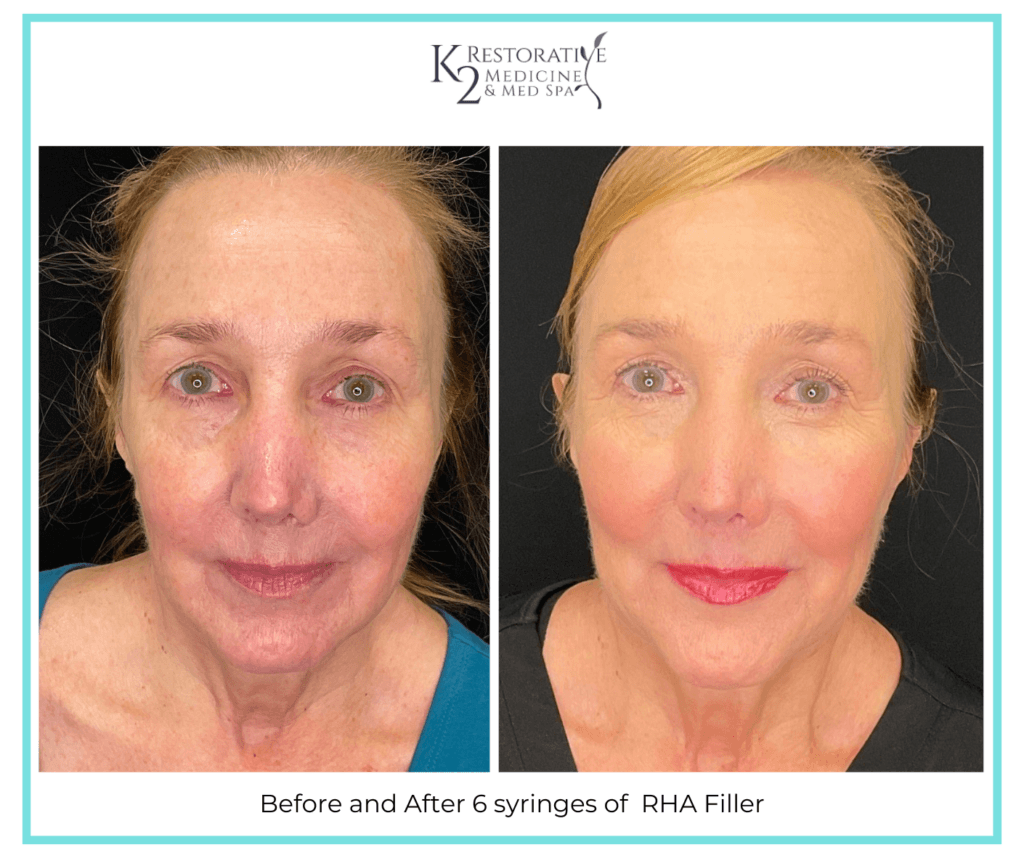
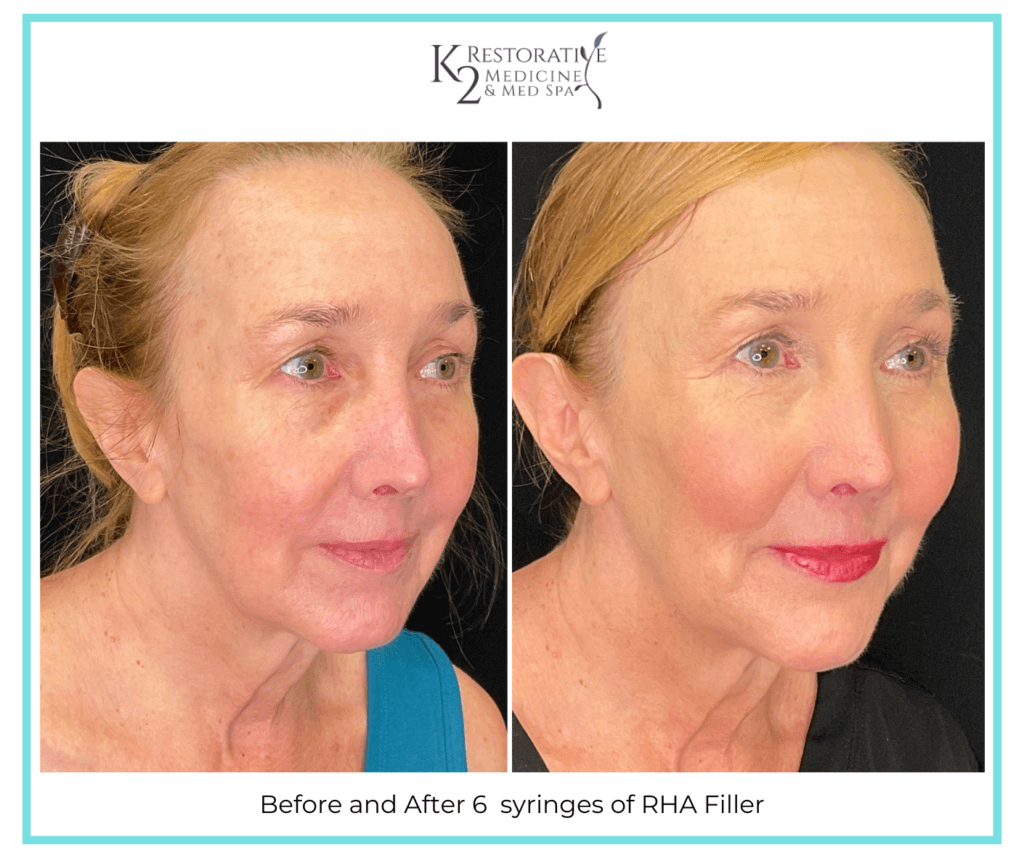
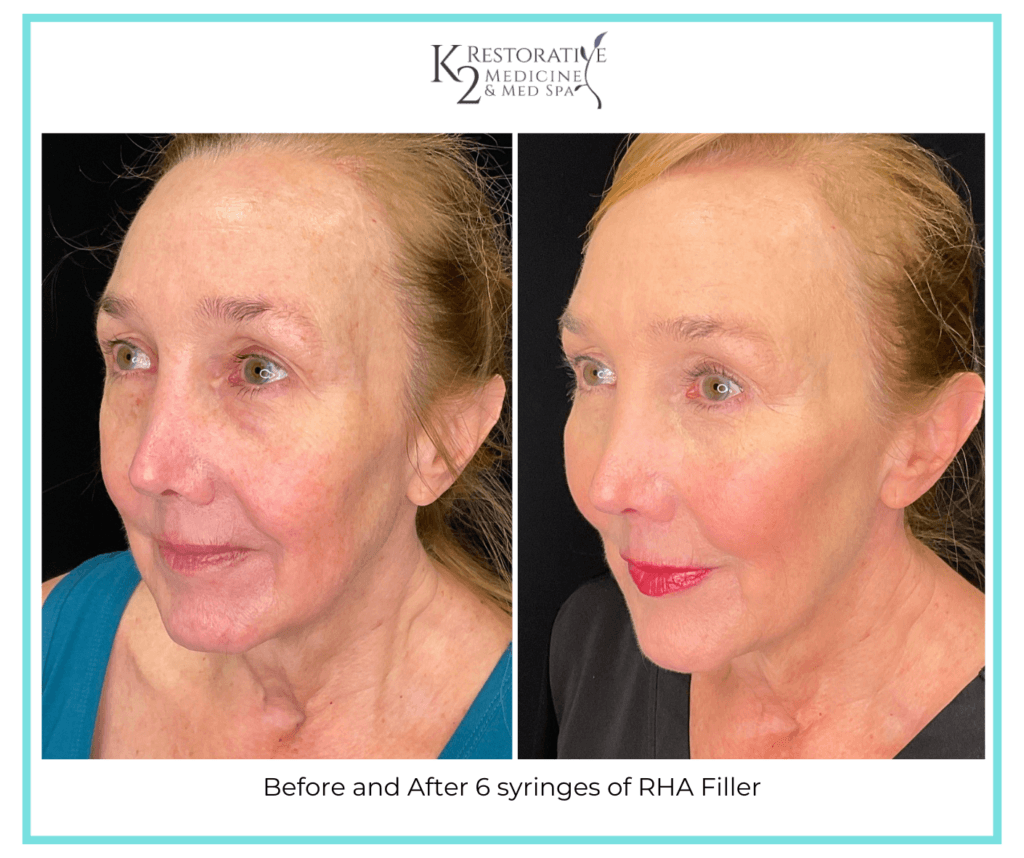
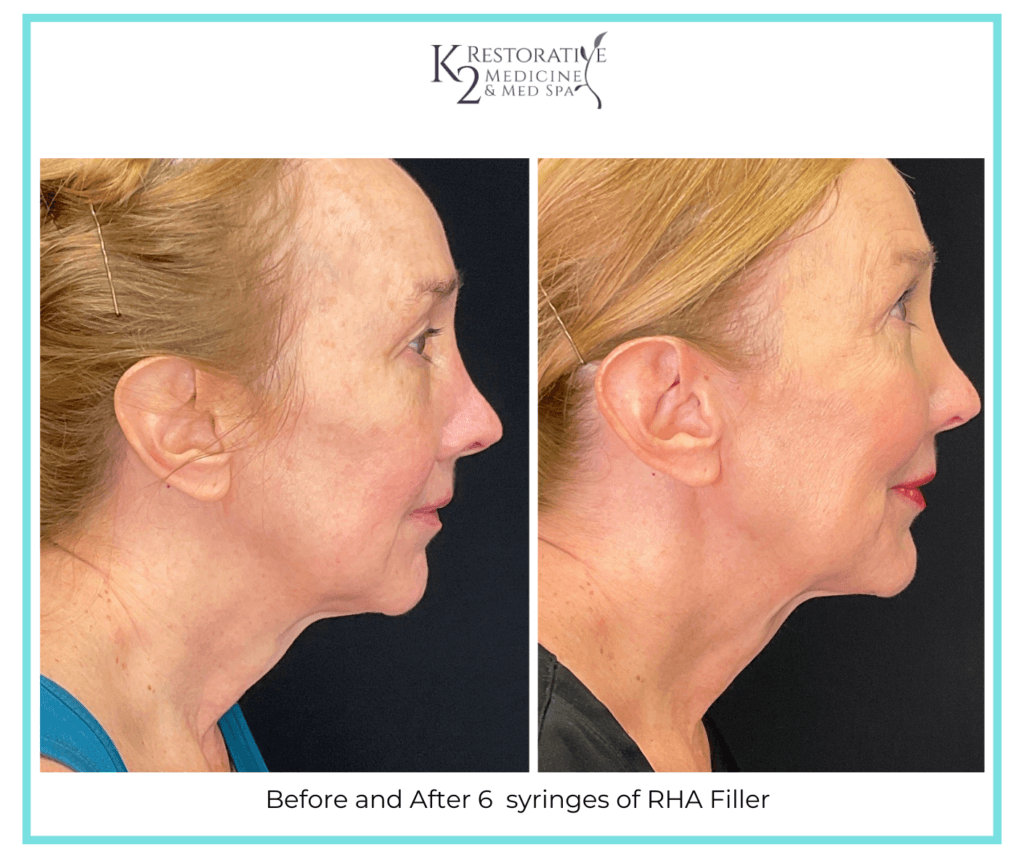
At K2 Restorative Medicine & Med-Spa in Trussville, Alabama, serving the greater Birmingham area, Dr. Pamela Kulback takes an individualized approach to facial aesthetics. The Teoxane RHA® Collection of dermal fillers gives her another option for patients interested in restoring facial volume, softening dynamic lines or enhancing facial contours while maintaining natural-looking movement.
RHA stands for Resilient Hyaluronic Acid. It is an FDA-approved family of hyaluronic acid dermal fillers designed specifically for areas of the face that move. Depending on the individual RHA formulation, FDA-approved uses include dynamic facial wrinkles and folds, perioral lines, lip augmentation and midface or cheek volume correction.
What Is RHA Filler?
RHA is a type of hyaluronic acid, or HA, dermal filler. Hyaluronic acid is a type of sugar naturally present in tissues throughout the body, including the skin. In dermal fillers, HA is formulated into an injectable gel that can temporarily restore volume and soften certain facial lines and folds.
The RHA Collection is manufactured using Teoxane’s Preserved Network Technology, a process developed to preserve more of the HA network while creating a gel capable of adapting to facial movement. The goal is natural-looking correction both when the face is at rest and while it is in motion.
Learn more about the Teoxane RHA Collection.
Why Is RHA Different From Traditional Hyaluronic Acid Fillers?
Your face is constantly moving. Smiling, laughing, eating and speaking repeatedly place movement and pressure on the tissues around the mouth, cheeks and lower face.
RHA fillers were developed with these dynamic areas of the face in mind. Their resilient gel structure is designed to adapt to facial movement while providing correction and support.
That does not mean conventional HA fillers are inferior. Different filler families have different characteristics, firmness, flexibility, lifting capacity and FDA-approved treatment areas. Dr. Kulback evaluates facial anatomy, movement, volume loss and the patient’s goals before determining which filler or combination of treatments may be most appropriate.
K2 offers several options for facial rejuvenation. Learn more about dermal fillers and injectables at K2 Restorative Medicine.
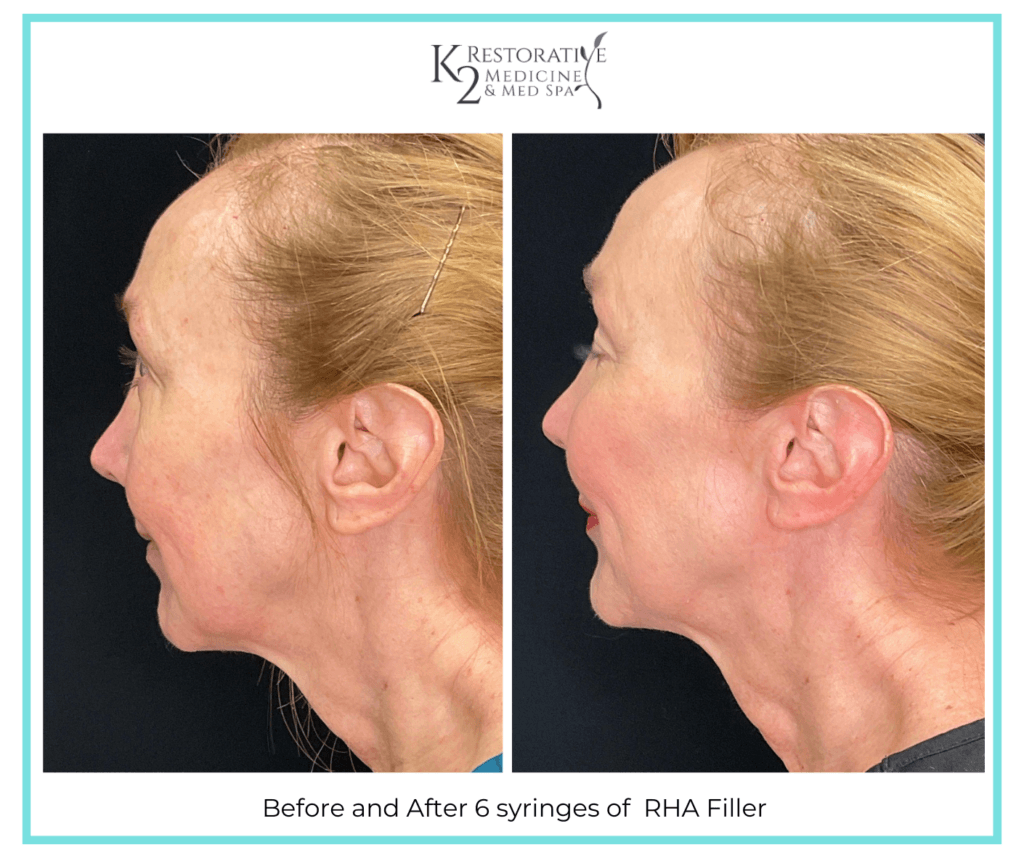
What Areas Can RHA Fillers Treat?
The RHA Collection includes different formulations designed for different aesthetic concerns.
RHA Redensity® is FDA approved for moderate to severe dynamic perioral lines around the mouth.
RHA® 2 is designed for moderate to severe dynamic facial wrinkles and folds, including nasolabial folds.
RHA® 3 can address dynamic facial wrinkles and folds and is also FDA approved for lip augmentation and lip fullness in adults age 22 and older.
RHA® Dynamic Volume can address deeper dynamic facial wrinkles and folds and is FDA approved for cheek augmentation and correction of age-related midface contour deficiencies in adults age 22 and older.
The appropriate product and injection area should always be determined during an individualized medical consultation.
Is RHA a Biological Filler?
No. RHA should not be classified as a biological or autologous filler.
RHA is a manufactured hyaluronic acid dermal filler. Hyaluronic acid itself is naturally found in the human body, which is one reason HA is widely used in aesthetic medicine, but the RHA injectable product is manufactured as a dermal filler and is regulated by the FDA as a medical device.
That distinction is important because K2 Restorative Medicine also offers treatments such as Derma PRP Bio Filler, which uses material derived from the patient’s own blood.
Patients interested in regenerative or autologous options can learn more about Derma PRP Bio Filler at K2 Restorative Medicine.
RHA Filler vs. Derma PRP Bio Filler
RHA and Derma PRP can both be used as part of a facial rejuvenation strategy, but they are fundamentally different.
RHA filler is a manufactured hyaluronic acid injectable designed to provide immediate structural correction, smoothing or volume depending on the formulation and treatment area.
Derma PRP Bio Filler is created using components derived from the patient’s own blood and is considered an autologous approach to facial rejuvenation.
Neither option is automatically “better.” The right choice depends on facial anatomy, degree of volume loss, treatment goals, desired timing of results and the overall rejuvenation plan.
Dr. Kulback may also recommend combining injectables with other treatments when appropriate rather than attempting to address every sign of facial aging with filler alone. K2’s existing treatment philosophy includes combining modalities when clinically appropriate.
Will RHA Filler Look Natural?
Natural-looking results depend on more than the filler itself.
Product selection, injection depth, placement, facial anatomy, volume and the experience of the injector all influence the final outcome. The RHA Collection was specifically developed to adapt to facial movement, but careful treatment planning remains essential.
Dr. Pamela Kulback has completed advanced training in facial aesthetics and dermal filler injection techniques and focuses on individualized treatment plans designed around each patient’s facial structure and aesthetic goals.
Learn more about Dr. Pamela Kulback.
How Long Does RHA Filler Last?
Longevity varies according to the specific RHA product, treatment area, amount injected and individual patient factors.
According to clinical data cited by the manufacturer, certain RHA formulations have demonstrated results lasting up to 15 months in dynamic wrinkles and folds, while results in areas including the lips and cheeks may last up to approximately one year. Individual results vary.
Dr. Kulback can discuss realistic expectations for both correction and longevity during your consultation.
Is RHA Filler Safe?
RHA products have received FDA approval for specific aesthetic indications in adults age 22 and older. However, dermal filler injections are medical procedures and are not risk-free.
Common reactions can include temporary swelling, bruising, redness, tenderness, firmness, discomfort, itching or bumps at the injection site. Rare but serious complications can occur if filler is unintentionally injected into a blood vessel. These complications can include tissue injury, vision abnormalities or blindness, and stroke.
The FDA recommends choosing a licensed healthcare provider who is trained in dermal filler injection, understands facial anatomy and is prepared to recognize and manage complications.
Patients should discuss allergies, medications, previous injectable treatments, medical conditions, recent dental procedures and any active skin inflammation or infection before treatment.
For additional safety information, visit the FDA’s information on dermal fillers.
RHA Filler in the Birmingham, Alabama Area
For patients searching for RHA filler in Birmingham, Trussville, Mountain Brook, Homewood, Vestavia Hills and surrounding communities, K2 Restorative Medicine & Med-Spa offers physician-directed aesthetic consultations with Dr. Pamela Kulback.
Rather than choosing a filler based solely on a brand name, your consultation is an opportunity to determine what is actually creating the change you see in the mirror. Dynamic wrinkles, facial volume loss, skin laxity and changes in skin quality often require different approaches.
The goal is not simply more filler. The goal is choosing the right treatment, in the right area, for the right patient.
Schedule a consultation with K2 Restorative Medicine.
Frequently Asked Questions
RHA stands for Resilient Hyaluronic Acid. The RHA Collection is a family of hyaluronic acid dermal fillers designed to adapt to facial movement.
RHA is not an autologous biological filler. It is a manufactured hyaluronic acid filler. Hyaluronic acid is a substance naturally present in the body, but the injectable RHA product is manufactured and regulated as a dermal filler medical device.
Depending on the specific RHA formulation, FDA-approved indications include dynamic wrinkles and folds, lines around the mouth, lip augmentation and cheek or midface volume correction in adults age 22 and older.
Yes. RHA 3 is FDA approved for lip augmentation and lip fullness in adults age 22 and older.
Results vary by product, treatment area and patient. Manufacturer clinical data reports results lasting up to 15 months for certain dynamic wrinkles and folds, with some lip and cheek results lasting up to approximately one year.
RHA is a hyaluronic acid filler. Hyaluronic acid fillers can generally be reduced or dissolved using hyaluronidase when clinically appropriate, although any corrective procedure has its own risks and should be performed by a qualified medical professional. The FDA notes that HA fillers are among the filler materials for which removal or reduction may be possible.
RHA filler adds or restores volume and can soften certain lines and folds. Neurotoxins work differently by temporarily reducing targeted muscle activity. The appropriate treatment depends on what is causing the wrinkle or aesthetic concern.
Dermal filler should be administered by an appropriately licensed healthcare professional with training and experience in facial anatomy, dermal filler placement and management of potential complications.
K2 Restorative Medicine & Med-Spa is located in Trussville, Alabama and serves patients throughout the greater Birmingham area. Dr. Pamela Kulback provides individualized aesthetic consultations and dermal filler treatments.