Helix Laser Skin Resurfacing
Helix laser skin resurfacing is a dual-wavelength treatment that combines a 10,600nm fractional ablative CO2 laser with a 1570nm non-ablative fiber laser in a single device. Manufactured by DEKA and distributed in North America by Cartessa Aesthetics, Helix treats fine lines, acne scars, sun damage, and rough skin texture. Treatment depth and downtime are adjustable, so protocols can be tailored to skin type and recovery tolerance.
Helix Laser Skin Resurfacing in Trussville and Birmingham, AL
Helix laser skin resurfacing treats fine lines, acne scars, sun damage, and rough texture by combining two laser wavelengths in one session, which means the surface of your skin and the deeper collagen layers can be addressed at the same visit. At K2 Restorative Medicine and Med-Spa, Helix treatments are planned and performed under the direction of Dr. Pamela Kulback, a board-certified physician who has practiced aesthetic and regenerative medicine for close to a decade. Our office is on Vann Road in the 35235 corridor, minutes from downtown Trussville and an easy drive from Clay, Pinson, Center Point, Chalkville, Springville, Moody, and Leeds.
The difference between Helix and a single-wavelength laser is control. Older resurfacing devices gave you one setting and one recovery window, take it or leave it. Helix runs at 70 watts and lets Dr. Kulback adjust the ratio of ablative CO2 energy to non-ablative 1570nm energy based on your skin type, the depth of your texture and pore concerns, and honestly, how much downtime your calendar can absorb this month. That is why the same device can deliver a light refresh before a wedding and a deeper correction for acne scarring for the patient in the next room.
Helix Laser Resurfacing at a Glance
| Detail | What to Expect |
| Treats | Fine lines, acne scars, surgical and traumatic scars, sun damage, uneven pigment, enlarged pores, rough texture, mild laxity |
| Technology | 10,600nm fractional ablative CO2 plus 1570nm non-ablative fiber laser |
| Protocols offered | CoolPeel, Sultra, Fusion |
| Treatment areas | Face, neck, chest, hands |
| Typical downtime | Varies by protocol, from about one day to roughly one week |
| Sessions typically needed | One for surface concerns, a series for deeper scarring |
| Results visible | Surface changes in one to two weeks, collagen remodeling over two to three months |
| Anesthesia | Topical comfort measures, discussed at consultation |
| Performed by | Dr. Pamela Kulback, board-certified physician |
| Location | 3536 Vann Road Suite C, Birmingham, AL 35235 (Trussville corridor) |
What Are the Three Helix Protocols?

What Does Helix Laser Resurfacing Treat?
Helix is used at K2 to address:
- Fine lines and early wrinkling around the eyes and mouth
- Acne scars and post-acne texture, including older scarring that has not responded to other treatments
- Sun damage and uneven pigment accumulated over years of Alabama summers
- Enlarged pores, rough texture, and mild laxity
- General signs of aging skin on the face, neck, chest, and hands
- Surgical and traumatic scars
If you are not certain which skin concern applies to you, that is what the consultation is for.
Who Is a Good Candidate for Helix Laser Resurfacing?
You are likely a good candidate for Helix if you are bothered by texture, scarring, sun damage, or early lines, you are in good general health, and you are willing to protect your skin from sun exposure while it heals. Helix can be tailored across a wide range of skin types, which is not true of every resurfacing laser.
At your consultation, Dr. Kulback reviews several factors that affect timing or protocol selection:
- Recent sun exposure or an active tan
- History of cold sores, which may call for a preventive prescription
- Recent isotretinoin use
- Pregnancy or nursing
- Medications that increase light sensitivity
- Personal history of keloid scarring
- Active skin infection or inflamed acne in the treatment area
None of these automatically disqualify you. Several simply change when we treat or which protocol we select.
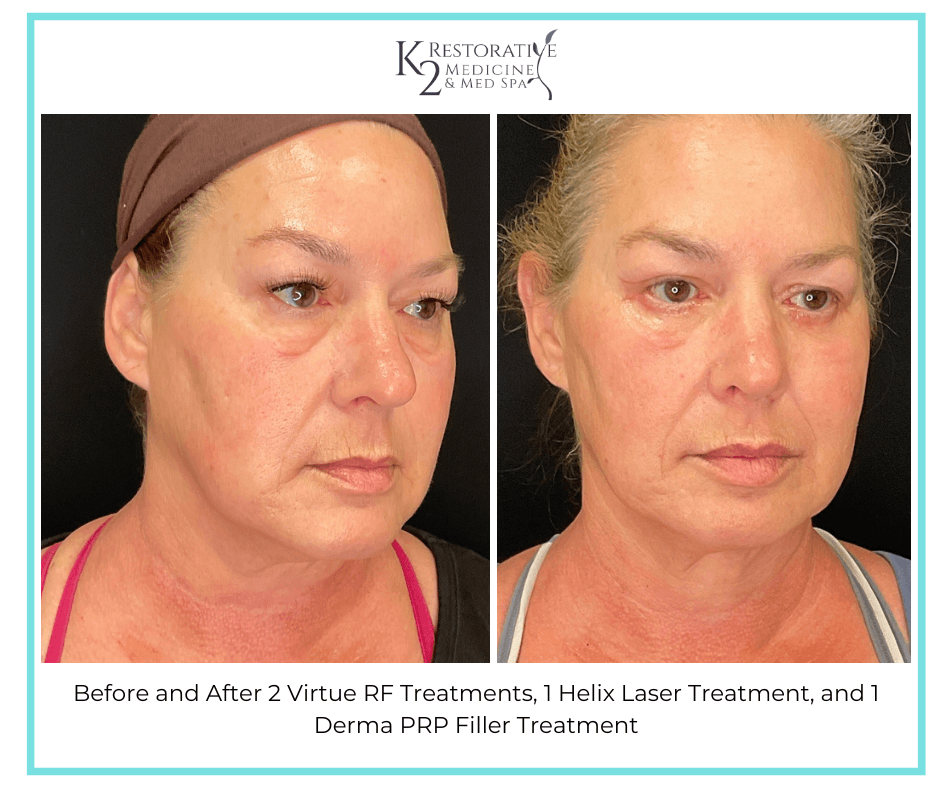
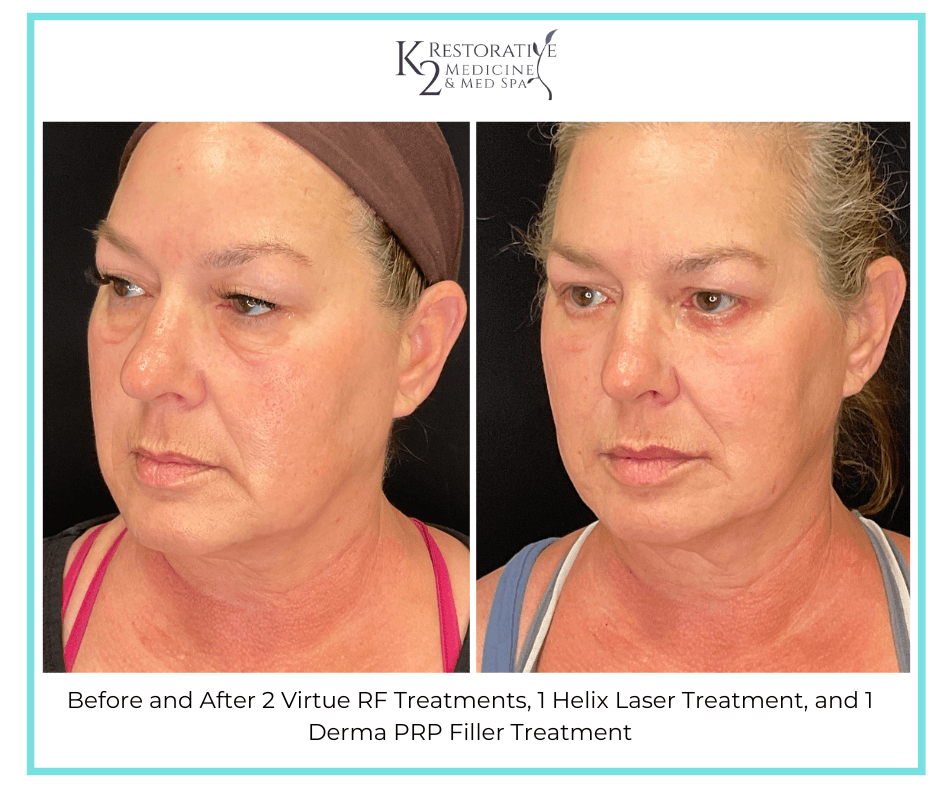
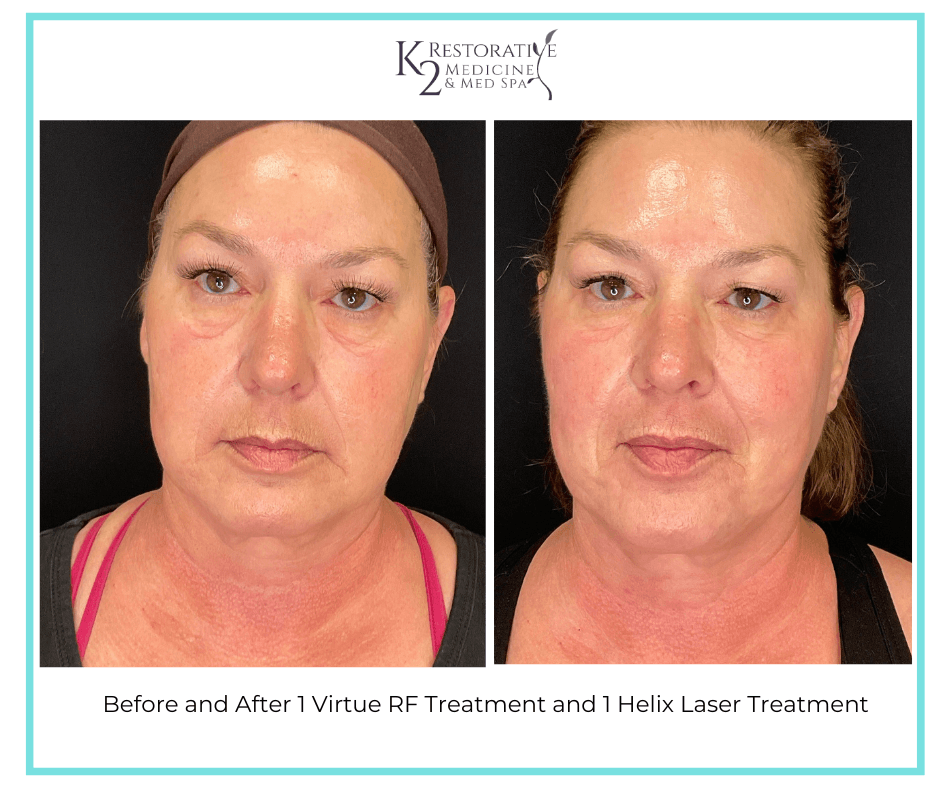
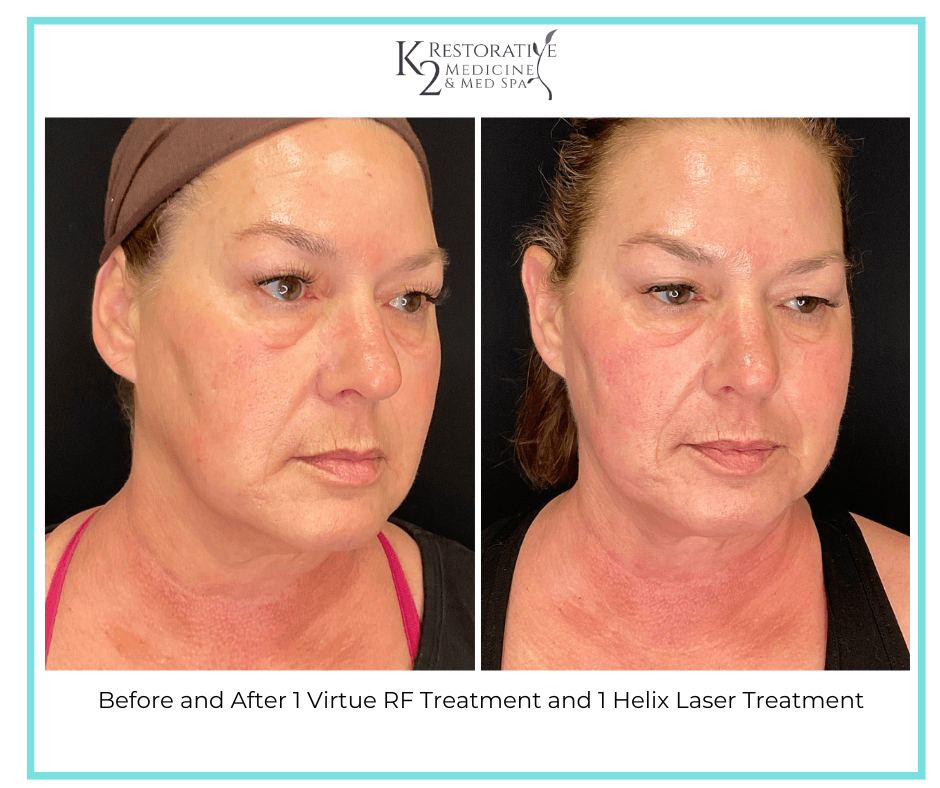
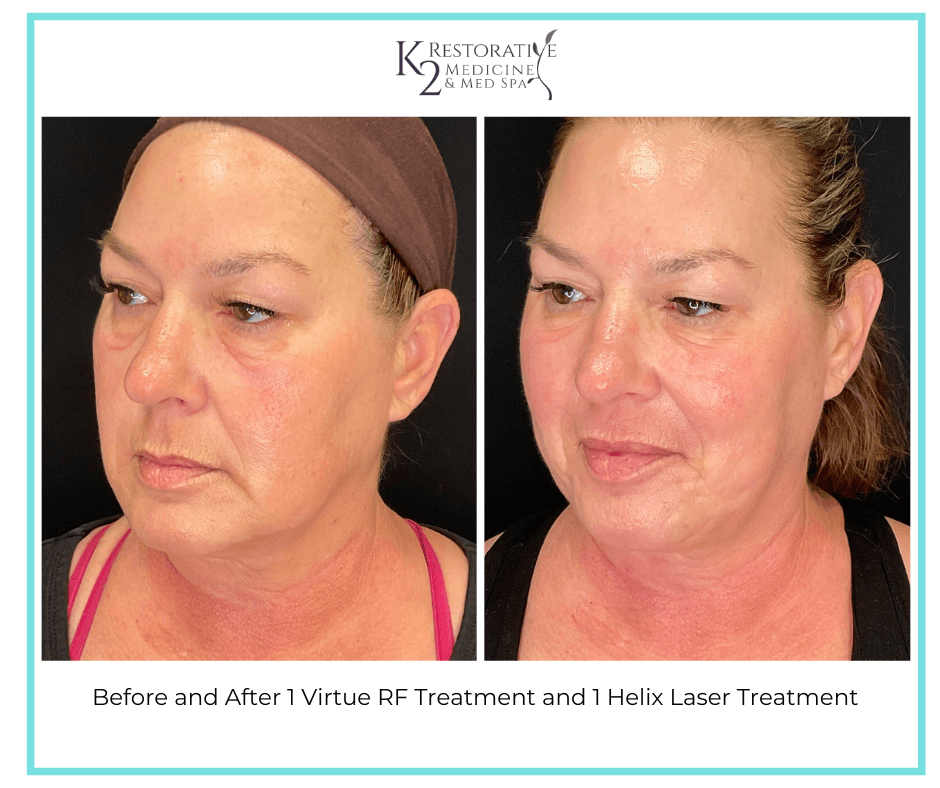
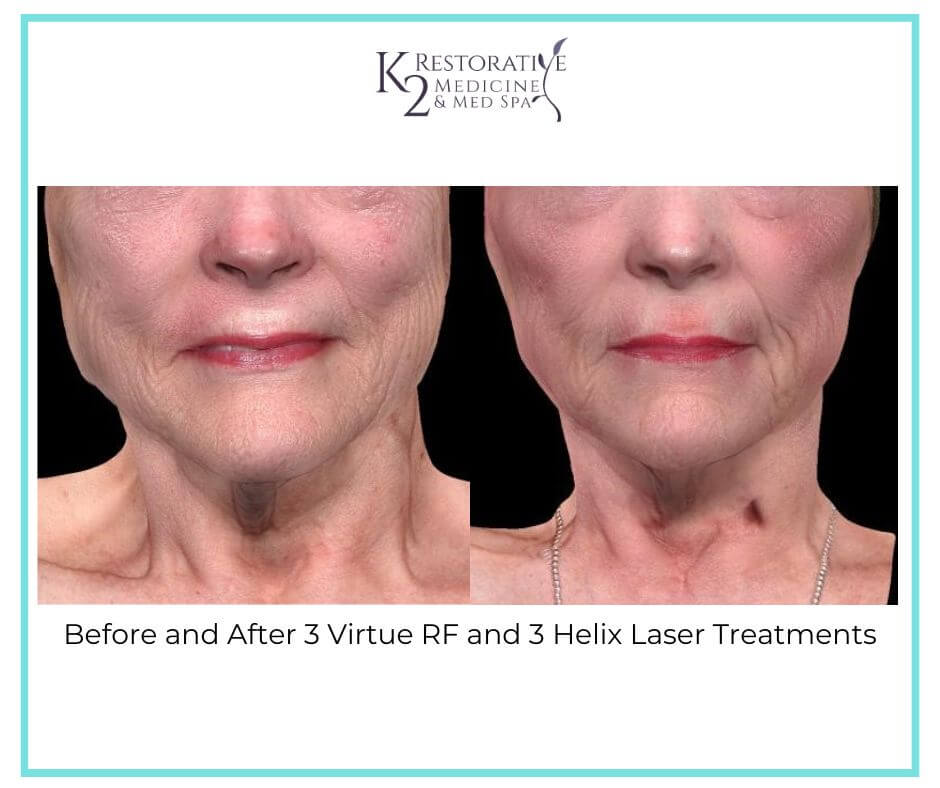
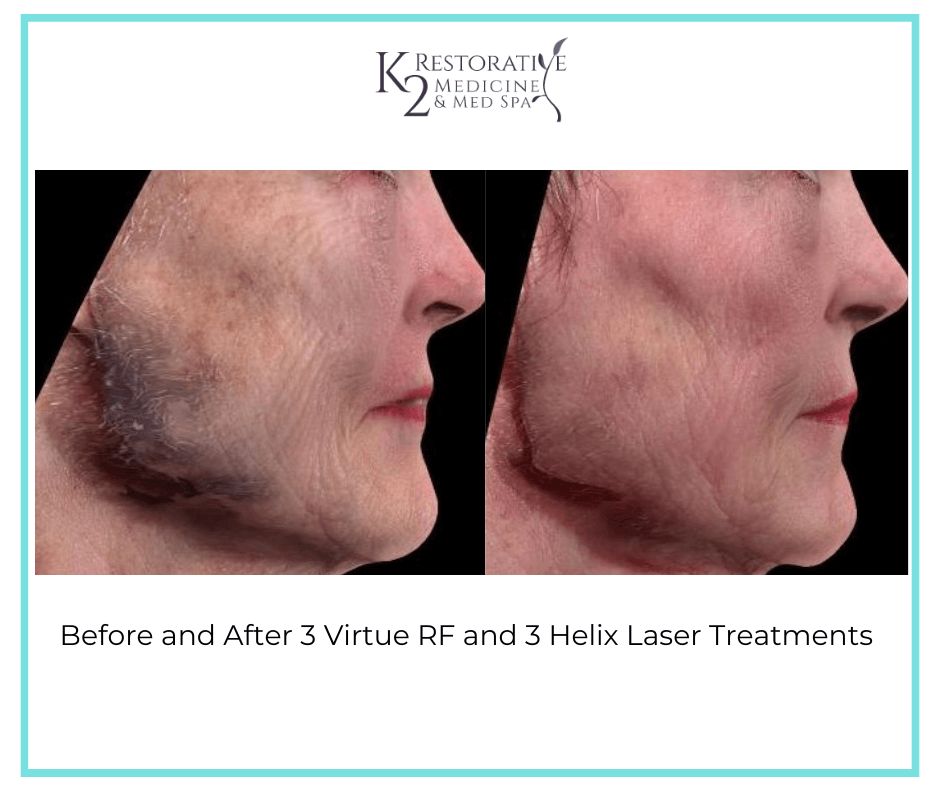
What Results Can I Expect, and How Long Is Recovery?
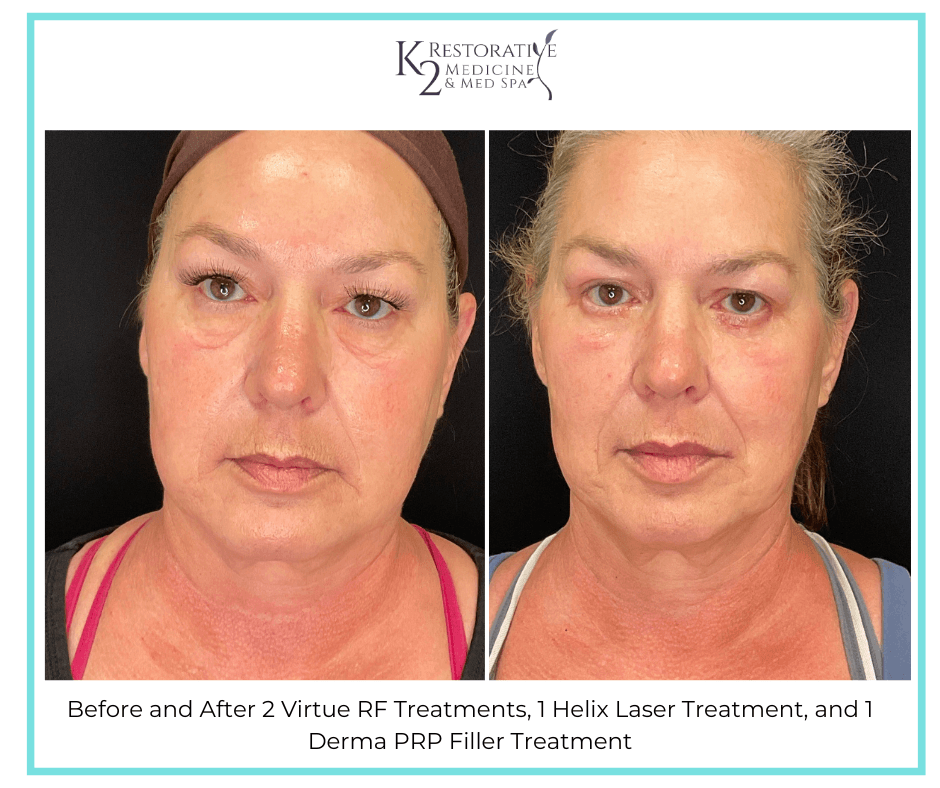
Recovery depends entirely on which protocol you receive. A CoolPeel session typically means redness comparable to a mild sunburn for a day or two. A deeper Fusion treatment involves more visible peeling and flaking, generally across several days, followed by a period where new skin looks noticeably smoother. Sultra sits between the two and leaves the skin surface intact.
Collagen remodeling is not immediate. Most patients notice surface improvement within the first one to two weeks, with firmness and scar softening continuing to develop over the following two to three months. Some concerns, particularly deeper acne scarring, are treated in a series rather than a single session. Dr. Kulback will tell you at consultation what is realistic for your skin rather than what sounds best in an advertisement.
Individual results vary. Helix is a medical laser treatment and carries risks including temporary redness, swelling, itching, pigment changes, and, uncommonly, infection or scarring. These are reviewed with you before treatment.
What Happens During a Helix Treatment at K2?
Consultation and skin assessment.
Dr. Kulback evaluates your skin type, concerns, and medical history, then recommends a protocol and a realistic number of sessions.
Pre-treatment preparation.
You receive instructions on sun avoidance, product pauses, and any prescriptions needed before your appointment.
Comfort measures.
Topical numbing is applied and given time to take effect. Depth of treatment determines what is used.
The laser pass.
Your selected protocol is delivered across the treatment area. You will feel heat and a prickling sensation.
Immediate aftercare.
Cooling and a protective barrier product are applied, and you go home with written post-care instructions.
Healing and follow-up.
Redness, peeling, or flaking follow depending on protocol. A follow-up visit confirms healing and determines whether additional sessions are appropriate.
How Does Helix Compare to Other Resurfacing Lasers?
| Helix Fusion | Traditional fractional CO2 | Non-ablative laser only | |
| Wavelengths | 10,600nm CO2 plus 1570nm | 10,600nm CO2 only | Single non-ablative wavelength |
| Skin surface | Controlled ablation, adjustable depth | Ablated | Left intact |
| Downtime | Adjustable by protocol | Generally longer | Generally minimal |
| Skin tone range | Broad, protocol dependent | Narrower | Broad |
| Strongest use case | Acne scarring, texture, lines | Deeper resurfacing | Maintenance, mild texture |
| Sessions | One to a series | One to a series | Usually a series |
How Does Helix Compare to Other Resurfacing Lasers?
| Helix Fusion | |
| Wavelengths | 10,600nm CO2 plus 1570nm |
| Skin surface | Controlled ablation, adjustable depth |
| Downtime | Adjustable by protocol |
| Skin tone range | Broad, protocol dependent |
| Strongest use case | Acne scarring, texture, lines |
| Sessions | One to a series |
| Traditional fractional CO2 | |
| Wavelengths | 10,600nm CO2 only |
| Skin surface | Ablated |
| Downtime | Generally longer |
| Skin tone range | Narrower |
| Strongest use case | Deeper resurfacing |
| Sessions | One to a series |
| Non-ablative laser only | |
| Wavelengths | Single non-ablative wavelength |
| Skin surface | Left intact |
| Downtime | Generally minimal |
| Skin tone range | Broad |
| Strongest use case | Maintenance, mild texture |
| Sessions | Usually a series |
Why Patients Across the Trussville Corridor Choose K2
- Physician-directed care. Your treatment plan is built by Dr. Pamela Kulback, a board-certified physician who has practiced aesthetic and regenerative medicine for close to a decade, not selected from a menu.
- One device, many settings. Because Helix adjusts across ablative and non-ablative energy, we match the treatment to your skin and your calendar instead of forcing a single protocol on every patient.
- A plan, not an appointment. Helix works alongside Virtue RF Microneedling, PRX DermPerfexion, and medical-grade Skinbetter Science products for maintenance between sessions.
- A practice patients return to. Read what they say in our reviews.
Medically reviewed by Dr. Pamela Kulback, board-certified physician and Medical Director, K2 Restorative Medicine and Med-Spa. Last reviewed: August 2026.
FAQs
Helix is a laser resurfacing system that combines a 10,600nm fractional ablative CO2 laser with a 1570nm non-ablative fiber laser in one device. That combination allows your provider to treat surface texture and deeper collagen layers in the same session, and to adjust how much of each your skin receives.
Helix adds a second wavelength that a standard CO2 laser does not have. A traditional fractional CO2 device offers one wavelength and one general recovery profile. Helix runs at 70 watts and can deliver the CO2 and 1570nm energies alone or blended in sequential or alternating modes, so treatment depth is matched to your skin type and your tolerance for downtime.
Most patients describe the sensation as heat with a prickling feeling. Topical comfort measures are used, selected based on the depth of your treatment, and are reviewed with you at consultation with Dr. Kulback.
Downtime depends on the protocol. CoolPeel usually means a day or two of redness. A deeper Fusion treatment typically involves several days of peeling and flaking. Sultra leaves the skin surface intact and generally produces the least visible recovery. K2 gives you a specific range at your consultation so you can plan around work and events.
Many patients see meaningful improvement after one session, particularly for surface concerns like fine lines and dullness. Deeper acne scarring is usually treated in a series. Dr. Kulback provides a realistic number after assessing your skin.
The Sultra 1570nm protocol is non-ablative and is used across a broad range of skin types, and Fusion protocols can be adjusted for the same reason. Skin tone is one of the first factors reviewed at consultation so the appropriate protocol is selected.
Surface improvements in tone and texture generally appear within the first one to two weeks. Collagen remodeling continues for roughly two to three months after treatment, so firmness and scar softening keep improving after visible healing has finished. Individual results vary.
Common temporary effects include redness, swelling, itching, dryness, and peeling. Less common risks include pigment changes, prolonged redness, infection, and scarring. All risks are reviewed with you before treatment as part of informed consent.
Yes. Helix is frequently paired with Virtue RF Microneedling, PRX DermPerfexion, and medical-grade skincare for maintenance between sessions. Sequencing and spacing are determined by Dr. Kulback based on your skin and healing.
K2 Restorative Medicine and Med-Spa is at 3536 Vann Road Suite C, Birmingham, Alabama 35235, in the Trussville corridor just off Highway 11. K2 regularly treats patients from Trussville, Clay, Pinson, Center Point, Chalkville, Springville, Moody, Leeds, Argo, and Irondale.
Request an appointment through the online form at k2medicine.com or call 205-255-1232. Every Helix treatment begins with a consultation and skin assessment with Dr. Pamela Kulback.
Book Your Helix Consultation in Trussville
Every Helix plan at K2 begins with a consultation and skin assessment with Dr. Pamela Kulback, so you leave knowing which protocol fits, what recovery actually looks like, and how many sessions to plan for. We serve patients from Trussville, Clay, Pinson, Center Point, Chalkville, Springville, Moody, Leeds, Argo, and Irondale.
Request an appointment online or call 205-789-8124. You can also contact our office with questions, or review current specials before you book.
Appointment Request
Payment Plans Reward Programs


Thomas McClung
3 years ago
Dr.Pam's P shot service was awesome fell like I am 18 again recommend her to any man that needs help

Hanna Alexander
3 years ago
i just left from getting my lips done and they look amazing! they made me feel so comfortable. i definitely recommend them to anyone looking to get anything done!

Melissa Lewis
3 years ago
My experience with laser hair removal has been wonderful! Jackie is a friendly & energetic technician. The price is comparable to other med spas. I highly recommend K2 in Trussville!

Nevesha Raymer
3 years ago
What a wonderful experience. Will be back for sure!

Karlin Fleming
3 years ago
Dr. Pam Kulback and staff are amazing! Highly recommend!

Julia Gray
3 years ago
Absolutely loved my interaction and experience at K2! I loved my results and will be back!

Micah Ray
3 years ago
I went to K2 Restorative Spa to receive my first session using Agnes RF and the results have been phenomenal! With my first session I look 10 years younger in my face and I plan to go back for two more sessions, and I couldn’t be happier with my results. Thank you!

Shealyn Cobb
3 years ago
I have had such a great experience with Mrs. Jackie at K2! I have had such amazing results with the laser and with the Even Tone Correcting Serum. I fully recommend K2 for your skin care needs! They are so nice and professional as well! 10/10 stars!

Yu Cao
4 years ago
I just got my lips done, it’s looks great! Dr. Pam do a very good job. I am so love my lips now!!

Brittny Mcallister
4 years ago
i had lip injections done and i am in LOVE with the results! everyone was so nice and Dr. Pam is great! will definitely be back 🙂

Crazy Cat Lady
4 years ago
Today was my first-time getting a Dysport injection as a prevention as well as my first-time visit to Dr. Pamela Kulback's office. She and her staff are top-notch! They're friendly, knowledgeable, and will treat you like family. Dr. Kulback will forever be my doctor because she takes her time listening to your needs. She's so caring and compassionate. Her receptionist is such a sweetheart and even gave me a few skincare samples to try. She also has an esthetician who checked on me to see if I was okay. You guys, if you're looking to get any type of anti-aging, etc. services, she's the one and ONLY ONE!!! 10/10
Payment Plans


All rights reserved. © 2026 Powered by DGM Global Marketing & Business Solutions.